
GI Pathogen Testing — Because "Food Poisoning" Is Not a Diagnosis
Medically reviewed by our MD Laboratory Director (a role required by CLIA; the director's name is on file in the CMS CLIA database, #45D2048957, and can be verified independently) · Editorial policy

Bacteria + viruses + parasites, one sampleCLIA #45D2048957 · CAP #8722734 · Same-day results · Walk-ins welcome
The question is not whether you have diarrhea. The question is what kind — because the answer changes what should happen next, completely.
Stool culture takes 2–4 days and mainly finds bacteria. It will not detect norovirus. It will not detect most parasites, including Giardia. By the time it comes back, the clinical window has usually closed anyway.
Our molecular GI panel covers bacteria, viruses and parasites from a single sample, same day. And that is not a convenience feature — it is the whole decision:
· Viral (norovirus, rotavirus): antibiotics do nothing. Fluids and time.
· Most uncomplicated bacterial diarrhea: antibiotics are still not recommended.
· STEC (Shiga toxin-producing E. coli): IDSA advises against antibiotics — they may increase the risk of hemolytic uremic syndrome.
· Parasites: need an antiparasitic, and culture will never find them.
So "just take something for it" is not neutral advice. It can be the wrong move — and for STEC, a dangerous one.
Stool culture takes 2–4 days and mainly finds bacteria. It will not detect norovirus. It will not detect most parasites, including Giardia. By the time it comes back, the clinical window has usually closed anyway.
Our molecular GI panel covers bacteria, viruses and parasites from a single sample, same day. And that is not a convenience feature — it is the whole decision:
· Viral (norovirus, rotavirus): antibiotics do nothing. Fluids and time.
· Most uncomplicated bacterial diarrhea: antibiotics are still not recommended.
· STEC (Shiga toxin-producing E. coli): IDSA advises against antibiotics — they may increase the risk of hemolytic uremic syndrome.
· Parasites: need an antiparasitic, and culture will never find them.
So "just take something for it" is not neutral advice. It can be the wrong move — and for STEC, a dangerous one.
Diarrhea, food poisoning, or something you picked up abroad? Text us.
📱 Text (713) 832-8892 📞 Call (713) 266-0808
📱 Text (713) 832-8892 📞 Call (713) 266-0808
3707 Westcenter Dr Suite 100, Houston, TX 77042 · Walk-ins welcome
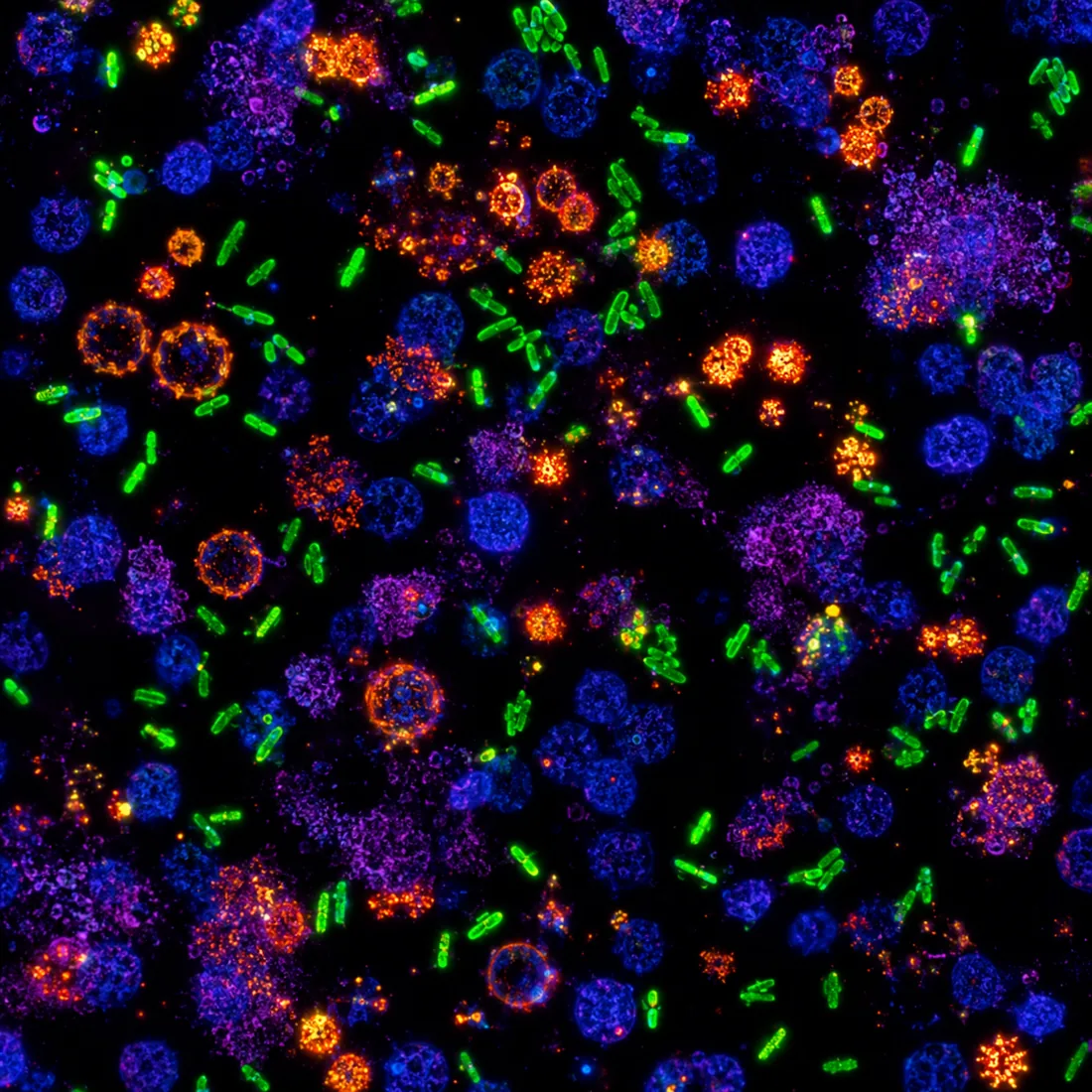
* Illustrative fluorescence rendering based on the biology and the assay chemistry — not a photomicrograph of a patient sample, and not an instrument output.
What the panel covers
| Class | Typical targets |
|---|---|
| Bacteria | Salmonella · Campylobacter · Shigella · STEC · C. difficile · Yersinia · Vibrio |
| Viruses | Norovirus · Rotavirus · Adenovirus · Astrovirus |
| Parasites | Giardia and others — invisible to stool culture |
How common is this, really? CDC estimates about 48 million foodborne illnesses in the U.S. each year — roughly 1 in 6 people — with about 128,000 hospitalizations and 3,000 deaths. This is not an exotic problem. It is a Tuesday.
The clinical value of a GI panel is not that it finds "something." It is that it tells ythe partner-network physician which of three fundamentally different situations you are in — and therefore whether antibiotics would help you, do nothing, or actively hurt you.
Go to an ER, not to us, if: you cannot keep fluids down or are severely dehydrated; you have black stools or heavy rectal bleeding; high fever with severe abdominal pain; a rigid or rapidly distending abdomen; confusion or a marked drop in urine output; or — after a STEC-positive result — weakness, pallor, petechiae or low urine output (possible HUS).
Where to go next
- What the GI panel actually covers, and how multiplex PCR works
- STEC: the infection where treating it can make it worse
- ACG / IDSA treatment pathways — when antibiotics belong, and when they do not
- H. pylori: why "treated" is not the same as "cured"
- A "stomach bug" that will not quit — when watery diarrhea is Cyclospora
- For clinicians: when to order Cyclospora testing, and which stool method detects it
FAQ
- Why is a stool culture not enough?
- It takes 2–4 days and mainly detects bacteria. It will not find norovirus or most parasites such as Giardia.
- How fast are results?
- Sample by 1:00 PM, results at 5:00 PM the same day. STAT in 2 hours if collected by 3:00 PM. Ask us about rush pricing.
- Will I be given antibiotics?
- Only if they are actually indicated. Antibiotics do not work on viruses, are not recommended for most uncomplicated bacterial diarrhea, and IDSA advises against them for STEC because of HUS risk.
- What is STEC and why does it matter?
- Shiga toxin-producing E. coli. IDSA advises against antibiotics for O157 or Shiga toxin 2-producing STEC because they may increase the risk of hemolytic uremic syndrome.
- I just got back from a trip.
- Then parasites need to be on the list — and stool culture will not find them. Our panel includes parasite targets.
- Can I be treated the same day?
- Yes, a licensed physician sees you 5:00–6:00 PM the same day if treatment is clinically appropriate.
Diarrhea, food poisoning, or something you picked up abroad? Text us.
📱 Text (713) 832-8892 📞 Call (713) 266-0808
📱 Text (713) 832-8892 📞 Call (713) 266-0808
3707 Westcenter Dr Suite 100, Houston, TX 77042 · Walk-ins welcome
References
- IDSA — Infectious Diarrhea: idsociety.org/practice-guideline/infectious-diarrhea
- CDC — Food Safety: cdc.gov/food-safety
- ACG — Clinical Guidelines: gi.org/guidelines
- CMS — CLIA: cms.gov/…/clia
Reach us — privately
Text is the fastest way to reach us.
Or send your details below — we will reply by text or email during open hours.