
What Does Defensible Toxicology Look Like in a Pain Practice?
For healthcare organizations and professionals (B2B) · Physician-led · Updated 2026-07-12 · CLIA #45D2048957 · CAP #8722734
CDC supports testing as risk mitigation — and cautions against dismissing patients over a result.CLIA #45D2048957 · CAP #8722734 · Same-day results · Walk-ins welcome
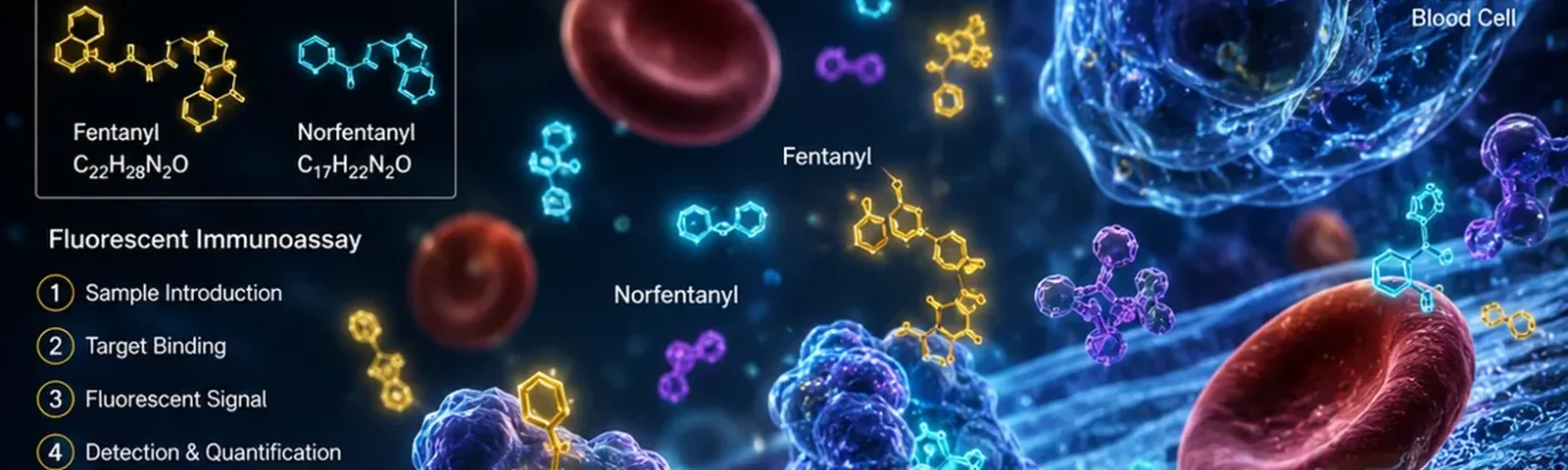
Three things. Individualized, documented frequency based on clinical risk — not a blanket schedule. Definitive LC-MS/MS confirmation before any consequential decision, because an immunoassay cross-reaction should never cost a patient their prescription. And fentanyl targeted specifically, because a standard opiate screen does not see it and the illicit supply is saturated with it.
What we provide, and what we will not do
| Provided | Not provided |
|---|---|
| Definitive LC-MS/MS with quantitation | Any payment or value in exchange for referrals |
| Fentanyl and norfentanyl targeting | Blanket reflex confirmation of every analyte, every visit |
| Specimen validity testing | Advice to test more often than clinically justified |
| Defined turnaround and courier logistics | Clinical interpretation on your behalf |
The CDC guideline is explicit: toxicology results should not be used as a reason to dismiss a patient from care. A result is information for a conversation, not a verdict.
Compliance. No payment for referrals, no revenue sharing, no inducements. Testing is performed on the basis of medical necessity and a physician order, at fair market value, consistent with the Anti-Kickback Statute and the Stark Law.
FAQ
- How often should we test?
- Individualized to clinical risk and documented. We will not recommend a volume target.
- Do you cover fentanyl analogs?
- We state exactly which analytes are covered. Ask for the list.
- Can you interface with our EMR?
- Yes — portal and EMR.
- What is the turnaround?
- A defined SLA — logistics.
References
- CDC — Clinical Practice Guideline for Prescribing Opioids (2022)
- ASAM — Appropriate Use of Drug Testing in Clinical Addiction Medicine
- HHS OIG — Fraud and Abuse Laws (AKS / Stark)
- Our CLIA #45D2048957 and CAP #8722734 credentials — verify them yourself
Reach us — privately
No name needed to ask a question. Text is the fastest way to reach us.
Or send your details below — we will reply by text or email during open hours.