
How Do You Actually Assess Whether a Patient Is Taking Their Medication?
For healthcare organizations and professionals (B2B) · Physician-led · Updated 2026-07-12 · CLIA #45D2048957 · CAP #8722734
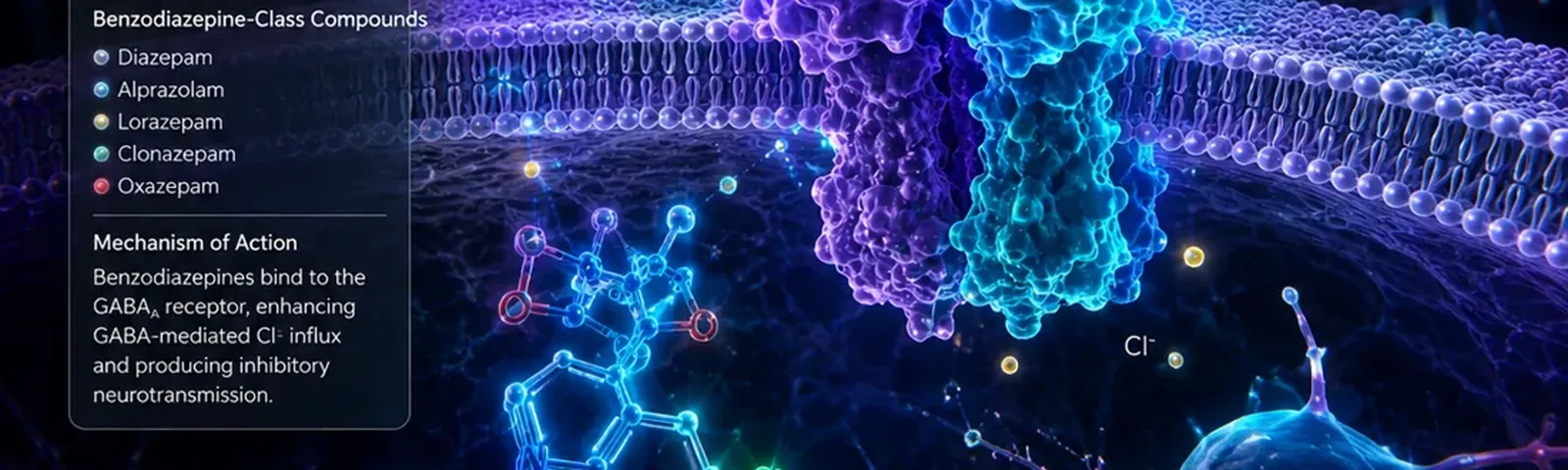
Adherence is a pattern, not a checkbox. Parent drug, metabolite ratios and quantitation are what reveal it.CLIA #45D2048957 · CAP #8722734 · Same-day results · Walk-ins welcome
Not with a positive/negative line. You look at the parent drug and its expected metabolites, quantitatively. A prescribed drug present with no metabolite raises the question of specimen adulteration — adding the pill to the sample rather than taking it. A prescribed drug entirely absent raises questions about diversion or non-adherence. Both are clinical conversations, and neither is established by an immunoassay.
What the patterns suggest
| Finding | Question it raises |
|---|---|
| Parent + expected metabolites, plausible quantity | Consistent with the prescribed regimen |
| Parent present, metabolite absent | Possible specimen tampering — a clinical conversation |
| Prescribed drug absent entirely | Non-adherence or diversion — a clinical conversation |
| Non-prescribed drug present | Confirm definitively, then discuss |
| Fentanyl present, not prescribed | A safety issue of the first order |
Every one of these findings is the start of a conversation with the patient — not grounds for discharge. CDC explicitly cautions against dismissing patients from care based on toxicology results.
Compliance. No payment for referrals, no revenue sharing, no inducements. Testing is performed on the basis of medical necessity and a physician order, at fair market value, consistent with the Anti-Kickback Statute and the Stark Law.
FAQ
- Can quantitation prove a dose?
- No. It supports consistency assessment. It does not back-calculate a dose, and any laboratory claiming otherwise is overreaching.
- Do you interpret results for us?
- We provide analytically defensible results and the analytical context. Clinical interpretation belongs to the treating clinician.
- What about pain-management programs?
- See pain management.
- What about addiction treatment settings?
- See addiction treatment.
References
- CDC — Clinical Practice Guideline for Prescribing Opioids (2022)
- ASAM — Appropriate Use of Drug Testing in Clinical Addiction Medicine
- SAMHSA — Substance Use Treatment Resources
- Our CLIA #45D2048957 and CAP #8722734 credentials — verify them yourself
Reach us — privately
No name needed to ask a question. Text is the fastest way to reach us.
Or send your details below — we will reply by text or email during open hours.