

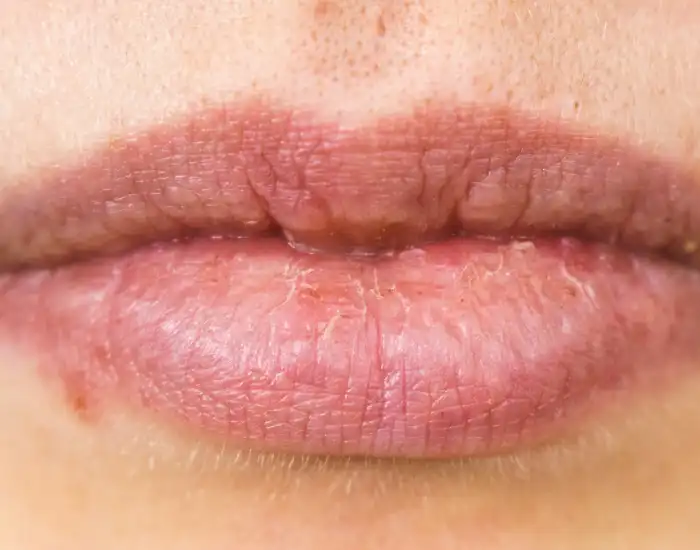
A sudden tingling on the lip. A small blister forming near the mouth. A sore that looks unfamiliar and feels uncomfortable. Many people immediately ask the same question: what does oral herpes look like?
Confusion often sets in quickly. Is it just a pimple? A canker sore? An allergic reaction? Should a primary care doctor be contacted, or is a specialist necessary? And does it require testing at a medical laboratory?
Uncertainty around visible oral changes can cause anxiety. The good news is that oral herpes is common, manageable, and diagnosable with the right evaluation. Understanding what it looks like and when to seek medical care can make decision-making much easier.
What Does Oral Herpes Look Like?
Oral herpes, most commonly caused by herpes simplex virus type 1, often appears as clusters of small fluid-filled blisters around the lips or mouth. These blisters may break open and form shallow ulcers before crusting over and healing.
When asking what does oral herpes look like, patients often describe:
-
Small, grouped blisters on the lip border
-
Clear or yellowish fluid inside the blisters
-
Red, inflamed skin surrounding the area
-
Crusting or scabbing after a few days
-
Tingling, itching, or burning before the sore appears
These sores are frequently called cold sores or fever blisters. They typically develop on:
-
The lips
-
The area around the mouth
-
The nostrils
-
Occasionally the gums or roof of the mouth
Unlike canker sores, which usually appear inside the mouth and are not contagious, oral herpes lesions are commonly located on the outer lip area and are contagious during active outbreaks.
Early Signs Before the Blisters Appear
Many individuals notice warning symptoms before visible sores form. Recognizing these early signs helps answer the question, what does oral herpes look like in its earliest stage.
Common early symptoms include:
-
Tingling or burning at the site
-
Mild swelling
-
Sensitivity to touch
-
Itching in a specific spot
This stage may last several hours to a day before blisters become visible.
Why Accurate Identification Matters
Visual appearance alone can sometimes be misleading. Several conditions may look similar:
-
Acne near the lip
-
Angular cheilitis
-
Allergic skin reactions
-
Impetigo
-
Canker sores
Because of these similarities, some people search for what does oral herpes look like near me hoping to compare images online. While online research can help, a proper evaluation is more reliable, especially if the diagnosis is uncertain.
Laboratory testing can confirm herpes simplex virus if needed. This is where medical testing facilities such as Auspicious Laboratory play a critical role in accurate diagnosis.
When Should Medical Attention Be Sought?
Most oral herpes outbreaks resolve within 7 to 14 days without complications. However, medical evaluation is recommended if:
-
The sores are unusually painful
-
Outbreaks happen frequently
-
Symptoms last longer than two weeks
-
The individual has a weakened immune system
-
Eye irritation develops
-
The diagnosis is uncertain
In these cases, testing may be advised to confirm the virus and rule out other conditions.
How Is Oral Herpes Diagnosed?
In many straightforward cases, a clinician can identify oral herpes based on physical appearance. However, when confirmation is needed, laboratory testing may include:
-
Viral culture from a swab of the sore
-
PCR testing to detect herpes simplex virus DNA
-
Blood testing to identify antibodies
A diagnostic facility like Auspicious Laboratory can process these tests accurately and efficiently, providing clarity when visual assessment alone is not enough.
Patients searching what does oral herpes look like near me often benefit from combining medical evaluation with reliable lab testing rather than relying solely on internet images.
How Is Oral Herpes Treated?
While there is no cure for herpes simplex virus, management focuses on controlling symptoms and reducing outbreaks.
Treatment may include:
-
Oral antiviral medications
-
Topical antiviral creams
-
Pain relief measures
-
Avoiding triggers such as excessive sun exposure
Early treatment at the first sign of tingling can shorten the duration of an outbreak.
Can Oral Herpes Be Prevented?
Although the virus remains in the body after infection, outbreak frequency can often be reduced.
Preventive strategies include:
-
Managing stress
-
Using lip balm with sun protection
-
Avoiding close contact during active outbreaks
-
Practicing good hand hygiene
If outbreaks occur often, a clinician may recommend suppressive antiviral therapy.
Common Questions Patients Ask
Is oral herpes dangerous?
For most healthy individuals, it is uncomfortable but not dangerous.
Does it always look the same?
No. The appearance can vary slightly from person to person and from one outbreak to another. This variation is why many people repeatedly ask, what does oral herpes look like.
Should testing always be done?
Not always. Testing is typically recommended when the diagnosis is unclear or complications arise.
Final Thoughts
Seeing an unfamiliar sore on the lip often triggers immediate concern. Many people quickly ask, what does oral herpes look like, because they want clear answers and fast reassurance. Taking that step shows responsibility and awareness. By actively recognizing the classic signs, understanding when a medical evaluation becomes necessary, and learning how laboratory testing can confirm a diagnosis, patients regain a sense of control.
However, if uncertainty continues, seeking professional medical assessment makes a meaningful difference. A qualified healthcare provider can examine the sore, determine whether testing is appropriate, and guide next steps with clarity. When laboratory testing is needed, accurate results help remove doubt and support confident decision-making. Ultimately, early evaluation not only improves clinical outcomes but also restores peace of mind.
Medical Disclaimer:
This content is provided for educational purposes only. It does not diagnose, treat, or replace professional medical advice. Anyone experiencing symptoms or health concerns should promptly consult a qualified healthcare provider for personalized evaluation and care.