

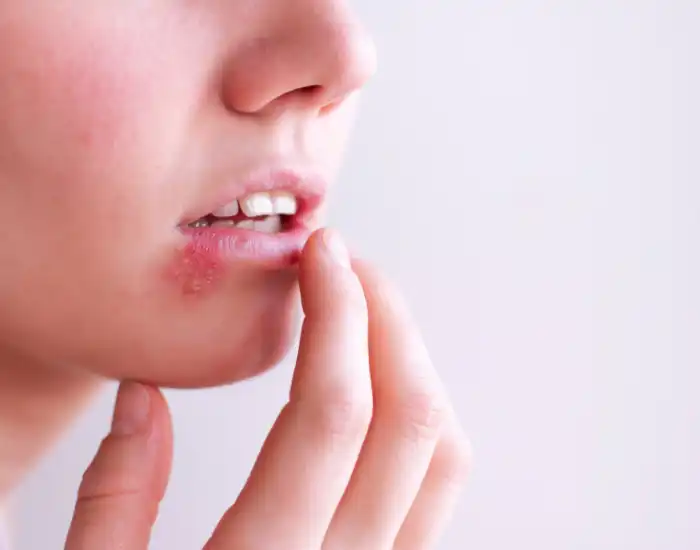
A small blister forms on the edge of the lip. It tingles, then burns. Within hours, it becomes more noticeable. Many people immediately start searching: what does herpes look like on your lips?
The confusion is understandable. Lip sores can look similar to acne, allergic reactions, or simple irritation. Some individuals worry about whether the infection could spread. Others wonder if symptoms like herpes in the throat are related. Without clear information, uncertainty can quickly lead to stress.
Understanding the visual signs, knowing when to pursue laboratory confirmation, and recognizing related symptoms help patients make informed decisions with confidence.
What Does Herpes Look Like on Your Lips in the Early Stage?
When asking what does herpes look like on your lips, the earliest phase often provides important clues.
Before a blister becomes visible, many people notice:
-
Tingling or burning at one specific spot
-
Mild swelling along the lip line
-
Sensitivity when touching the area
-
A tight or itchy sensation
Within a day, small fluid-filled blisters usually appear. These blisters often cluster together and sit on a red, inflamed base.
At this stage, the answer to what does herpes look like on your lips becomes clearer: grouped blisters rather than a single isolated bump.
How Lip Herpes Typically Progresses
After the blister stage, the sore often:
-
Breaks open
-
Leaks clear or slightly yellow fluid
-
Forms a shallow ulcer
-
Crusts and scabs over
-
Gradually heals within 7 to 14 days
The location matters. Lip herpes commonly develops:
-
Along the lip border
-
At the corners of the mouth
-
Just above or below the lips
Because appearance can vary slightly, people frequently search again, what does herpes look like on your lips, especially if the sore does not look exactly like online photos.
Could It Spread Beyond the Lips?
Although most outbreaks remain localized, the herpes simplex virus can affect nearby areas.
Some individuals worry about herpes in the throat, particularly if they experience discomfort while swallowing. While less common than lip lesions, herpes in the throat can occur, especially during a primary infection. Symptoms may include:
-
Sore throat
-
Fever
-
Swollen lymph nodes
-
Pain when swallowing
If throat symptoms accompany lip blisters, medical evaluation becomes more important. In certain cases, testing helps confirm whether both symptoms stem from the same viral infection.
When Visual Appearance Is Not Enough
Even though many outbreaks follow a recognizable pattern, not every sore looks textbook-perfect. Acne, impetigo, and allergic reactions may resemble herpes.
Therefore, instead of relying solely on visual comparison, laboratory testing offers objective confirmation.
Diagnostic testing may include:
-
Swab PCR testing from an active lesion
-
Viral culture
-
Blood testing for herpes simplex antibodies
Facilities such as Auspicious Laboratory perform herpes simplex virus testing using standardized diagnostic methods. Accurate lab analysis replaces guesswork with evidence-based results.
This step becomes especially helpful when patients repeatedly ask, what does herpes look like on your lips, but remain uncertain after reviewing symptoms.
Why Accurate Diagnosis Matters
Knowing exactly what does herpes look like on your lips helps individuals recognize patterns. However, confirmation through laboratory testing:
-
Reduces anxiety
-
Prevents misdiagnosis
-
Guides appropriate treatment decisions
-
Clarifies whether related symptoms such as herpes in the throat are involved
When results provide clarity, patients can move forward with greater confidence.
Final Thoughts
Not every lip sore is herpes. Still, when blisters cluster along the lip border and follow a predictable pattern, the question what does herpes look like on your lips becomes easier to answer. Recognizing early warning signs, understanding how lesions progress, and paying attention to related symptoms like herpes in the throat help individuals take informed action.
When uncertainty persists, laboratory confirmation offers the most reliable path forward. Accurate diagnostic testing provides clear answers and supports confident medical decision-making.
Medical Disclaimer:
This content is provided for educational purposes only. It does not diagnose, treat, or replace professional medical advice. Anyone experiencing symptoms or health concerns should consult a qualified healthcare provider and seek appropriate laboratory testing for personalized evaluation.