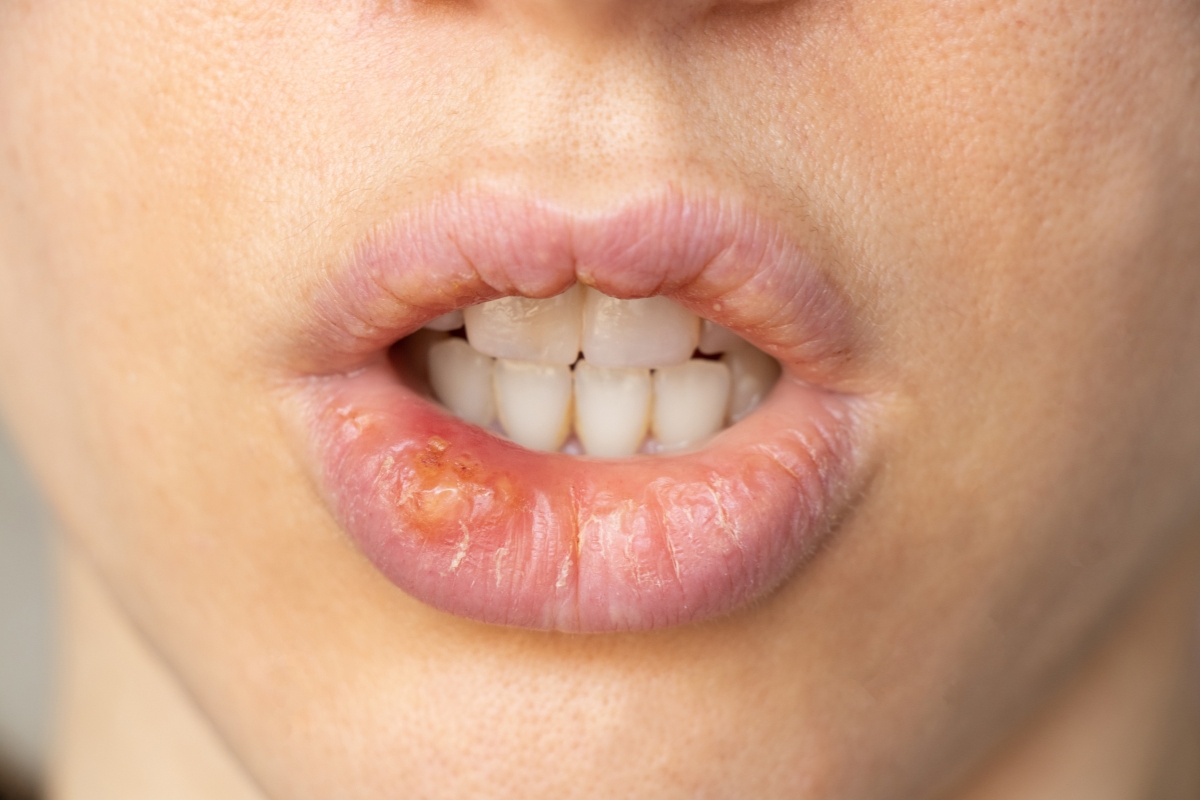
Herpes rash pictures often show grouped blisters, red irritated skin, crusting sores, or painful lesions around the lips, mouth, or nearby skin. Oral herpes caused by HSV-1 commonly begins with tingling, burning, or itching before visible blisters and rash-like symptoms appear.
Many people search online for “herpes rash pictures,” “HSV-1 rash,” “cold sore pictures,” or “what does herpes look like” because herpes symptoms can sometimes resemble acne, allergic reactions, mouth ulcers, pimples, or other skin conditions.
Notes:
In this blog, you will learn what herpes rashes may look like, understand early HSV-1 symptoms, recognize cold sore healing stages, compare herpes with other skin conditions, and know when confidential testing may be appropriate.

Table of Contents
- What Does a Herpes Rash Look Like?
- What Does Oral Herpes Rash Look Like?
- Early Stages of HSV-1 Rash
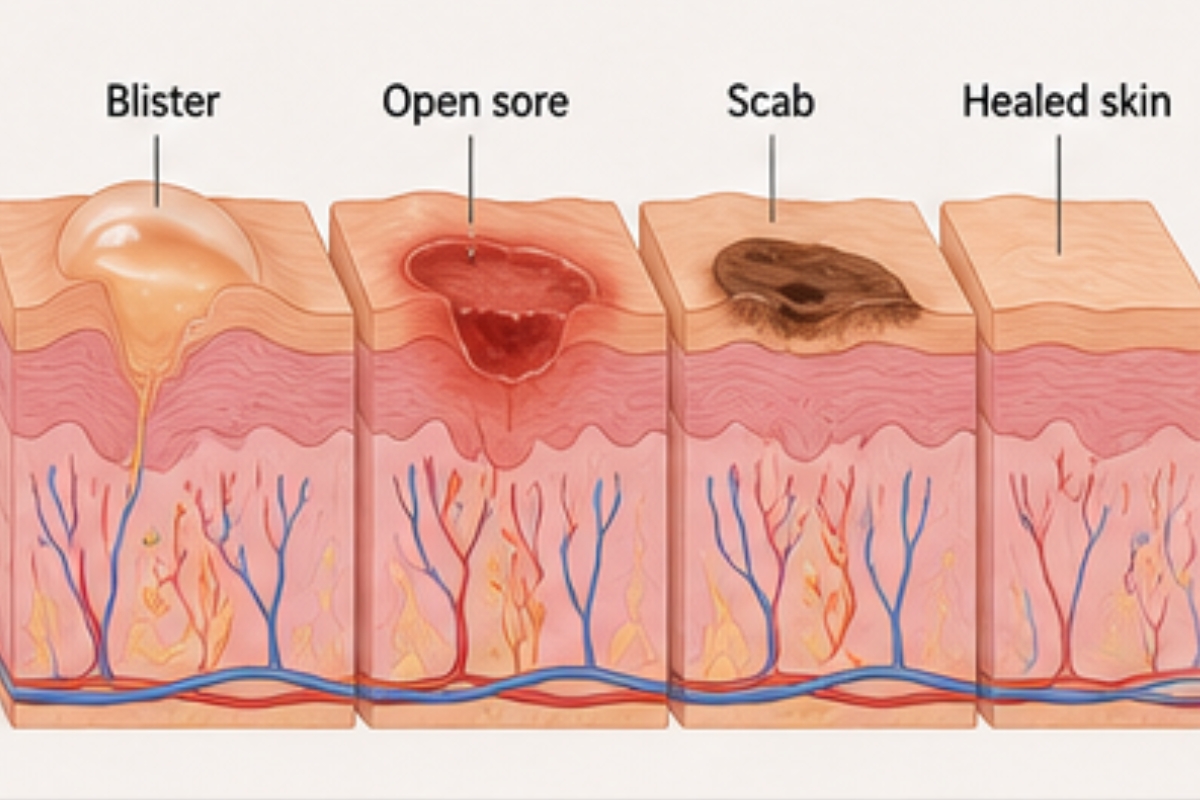
- Healing Stages of Herpes Rash
- Herpes Rash vs Other Skin Conditions
- When Is Herpes Rash Most Contagious?
- When Should You Get Tested?
- Frequently Asked Questions
What Does a Herpes Rash Look Like?
Herpes rash symptoms often appear as grouped blisters, painful sores, red irritated skin, or crusting lesions. The appearance may vary depending on the outbreak stage, skin sensitivity, and whether the infection involves HSV-1 or HSV-2.
Common Signs of Herpes Rash
- Small fluid-filled blisters
- Red irritated skin
- Grouped sores
- Burning or tingling sensation
- Painful skin irritation
- Crusting or scabbing
- Recurring outbreaks in same area
Can Herpes Rash Look Different in Different People?
Yes. Some people develop severe visible outbreaks, while others experience mild redness, small bumps, or irritation that may be difficult to recognize.
Where Does Herpes Rash Usually Appear?
HSV-1 oral herpes commonly appears around the lips, mouth, gums, tongue, or surrounding facial skin.
Patients searching for oral herpes symptoms may also review What Does Herpes Look Like? for additional symptom explanations and visual guidance.
What Does Oral Herpes Rash Look Like?
Oral herpes rash often begins with tingling or burning before visible blisters appear around the lips or mouth.
Common Oral HSV-1 Rash Symptoms
- Tingling lips
- Burning around mouth
- Cold sore blisters
- Dry crusting sores
- Painful lip irritation
- Red inflamed skin
Can Oral Herpes Rash Spread?
HSV-1 may spread through direct oral contact, especially during active outbreaks involving visible sores or blisters.
Can Herpes Rash Appear Inside the Mouth?
Yes. Some oral herpes outbreaks may affect the tongue, gums, roof of mouth, or inner cheeks.
People searching for visual oral herpes symptoms may also review What Does Mouth Herpes Look Like?.
Early Stages of HSV-1 Rash
Many herpes rashes begin with early warning symptoms before visible sores fully appear.
Stage 1 — Tingling & Burning
Tingling, itching, burning, or unusual skin sensitivity often happen before visible blisters develop.
Stage 2 — Small Blister Formation
Small grouped blisters may begin appearing around the lips or mouth.
Stage 3 — Open Sores
The blisters may rupture and form painful sores or ulcers.
Patients concerned about early HSV warning signs may also review Tingling Lips Before a Cold Sore.
Healing Stages of Herpes Rash
As herpes rashes heal, the appearance often changes gradually over time.
Crusting & Scabbing
Cold sores commonly dry out and form crusts during healing.
Fading Redness
Redness may gradually fade as inflammation improves.
Skin Recovery
The skin usually continues recovering after scabbing improves.
Patients interested in recovery stages may also review What Does Healing Herpes Look Like?.
Notes:
Herpes rash appearance may change significantly during healing stages. Crusting, dry scabs, reduced swelling, and fading redness are often common signs of recovery.
Herpes Rash vs Other Skin Conditions
Herpes rash symptoms can sometimes resemble several other skin conditions.
Herpes Rash vs Pimple
Cold sores often involve tingling and grouped blisters, while pimples are usually isolated acne bumps.
Herpes Rash vs Allergic Reaction
Allergic reactions may cause widespread irritation or swelling, while HSV-1 often forms localized blisters or sores.
Herpes Rash vs Canker Sores
Canker sores usually occur inside the mouth and are not caused by HSV.
Patients comparing herpes symptoms with other conditions may also review:
When Is Herpes Rash Most Contagious?
HSV-1 is generally considered more contagious during active outbreaks involving visible sores, blisters, or crusting lesions.
During Active Blisters
Transmission risk may increase when fluid-filled blisters are present.
During Crusting Stages
Some transmission risk may still remain during crusting stages.
Without Visible Symptoms
Some people may potentially spread HSV-1 even without obvious visible symptoms.
Patients concerned about silent HSV infections may also review Can You Have an STD Without Symptoms?.
When Should You Get Tested?
Testing may be appropriate if you experience recurring cold sores, unexplained oral rashes, mouth sores, or symptoms after possible exposure.
Signs You May Consider HSV Testing
- Recurring cold sores
- Grouped blisters
- Tingling lips before outbreaks
- Painful mouth sores
- Unexplained lip irritation
- Symptoms after intimate contact
How Is Herpes Testing Performed?
HSV testing may involve blood testing or swab testing depending on symptoms and timing.
Patients experiencing oral herpes symptoms, cold sores, HSV-1 concerns, or recurring rash-like outbreaks often search for Confidential Herpes Testing Near Me in Houston TX to privately evaluate symptoms.
Confidential Herpes & STD Testing in Houston at Auspicious Lab
For patients experiencing oral herpes symptoms, recurring cold sores, HSV-1 concerns, painful lip blisters, mouth sores, or possible STD exposure, Auspicious Laboratory, Inc. provides confidential, fast, affordable, and accurate medical testing services in Houston designed to support informed healthcare decisions.
As a trusted CLIA/CAP-certified high-complexity laboratory in Houston, TX, Auspicious Lab offers professional diagnostic services with strong emphasis on privacy, fast turnaround times, and reliable laboratory testing support.
Patients searching for herpes testing in Houston, oral herpes testing, HSV-1 testing, confidential STD testing, or same-day laboratory testing may benefit from speaking with our experienced laboratory team regarding available testing options.
Contact Auspicious Lab today to learn more about confidential herpes and STD-related testing services in Houston.
Frequently Asked Questions
What does herpes rash look like?
Herpes rash often appears as grouped blisters, red irritated skin, painful sores, or crusting lesions around the lips or mouth.
Can HSV-1 rash appear inside the mouth?
Yes. Oral herpes may sometimes affect the tongue, gums, roof of the mouth, or inner cheeks.
Are herpes rashes always painful?
Symptoms vary. Some people experience severe discomfort, while others have mild irritation or tingling.
How long do herpes rashes last?
Healing time varies depending on outbreak severity, immune response, and recovery stages.
Can herpes rash be mistaken for acne?
Yes. Early herpes symptoms may sometimes resemble pimples or other skin irritation.
Can stress trigger HSV-1 outbreaks?
Stress, illness, fatigue, and immune changes may contribute to outbreaks in some individuals.
Final Thoughts on Herpes Rash Pictures & HSV-1 Symptoms
Herpes rash pictures commonly show grouped blisters, crusting sores, healing scabs, and irritated skin associated with HSV-1 oral herpes. Because herpes symptoms may resemble acne, mouth ulcers, allergic reactions, or other skin conditions, understanding visual warning signs may help reduce confusion.
Recognizing cold sore stages, understanding HSV-1 healing patterns, and considering confidential testing when appropriate may help patients make informed healthcare decisions.
If you are experiencing recurring oral herpes symptoms, cold sores, lip blisters, or unexplained rash-like outbreaks, you may contact Auspicious Lab for confidential testing information and available laboratory services in Houston.
Disclaimer: This content is for educational purposes only and should not replace medical advice, diagnosis, or treatment from a licensed healthcare professional.